Ant Control
Professional ant extermination that protects your home and family from invasive colonies
Full Home Protection
Interior and exterior treatments covering every entry point
Service Guarantee
Free callbacks between quarterly visits if pests return
Pet & Child Safe
Eco-friendly and botanical options for sensitive households
Documented Visits
Written reports and photo documentation on every service
5 Highlights on Ant Control
Ant control is the targeted extermination and prevention of ant infestations inside and around your property. Our licensed technicians handle every species found in Florida with precision and effective, proven methods.
Carpenter Ant Treatment:
We locate galleries inside wood structures, remove nesting colonies, and seal entry points to stop costly damage to framing and foundations.
Fire Ant Treatment:
Our team applies granular bait across mounds and ground-level nesting sites, killing the queen ant and collapsing aggressive, venomous colonies within days.
Sugar Ant & House Ant Control:
We bait foraging trails in kitchens and pantries, eliminating odorous ants, pavement ants, and pharaoh ants at the source.
Integrated Pest Management:
Our IPM approach combines inspection, monitoring, and residual barrier sprays to suppress recurring pests with minimal impact on your living environment.
Eco-Friendly Options:
We offer biodegradable, non-toxic insecticides and pet-safe gel baits that help rid your property of worker ants while keeping children and animals protected.
Every treatment includes a perimeter inspection, identification of the species, and a written plan that maps each colony, mound, and crack our technician treats. Call (888) 937-1527 for a free evaluation. We serve homeowners across Seminole, Orange, Osceola, Volusia, and Brevard counties, and our team will solve your ant problem at the source.
Why Choose Our Ant Control
Ant control by Abode Pest Solutions delivers measurable results backed by hands-on experience, Florida DACS-licensed technicians (License #JB199300), and EPA-registered products. Our team completes state licensing, ongoing pesticide training, and species identification courses that sharpen their fieldwork.
We guarantee our work. If ants return between scheduled visits, we re-treat the affected area at no additional cost. That promise covers carpenter ants chewing through joists, fire ants swarming the yard, and sugar ants invading the pantry.
Our pricing stays transparent. You’ll know the full price before any technician applies product, and we provide a clear explanation of each insecticide, bait, or granule on the label. No surprise fees. No vague service tickets.
We use targeted application instead of blanket fumigation. Our crews bait colonies, drench nests, and dust voids only where pheromones and foraging activity confirm ant presence. That precision protects beneficial insects, reduces residual chemicals indoors, and keeps your household sanitary. It is the best way to improve long-term pest control results.
Customers trust us because we show up on time, wear protective gear, and explain findings in plain language. Rated 4.9 stars across 312+ Google reviews, homeowners consistently highlight our quick response windows, thorough inspections, and technicians who treat their home with respect.
We also document every visit. You’ll receive a digital report listing the species identified, products applied, MSDS references, and follow-up recommendations. That record supports real estate transactions, business inspections, HOA compliance, and warranty claims, making every service fully traceable.
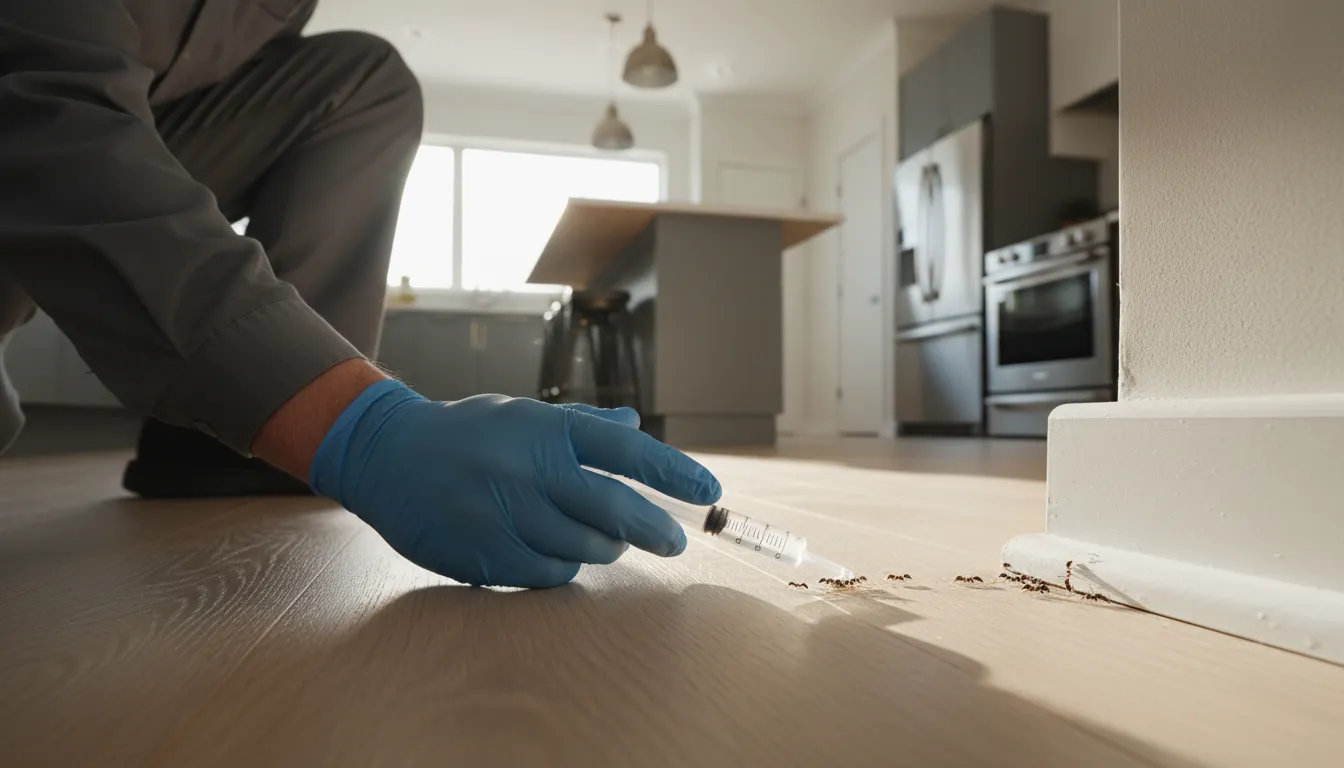
Service Guarantee
Free callbacks between scheduled visits if pests return – at no extra cost
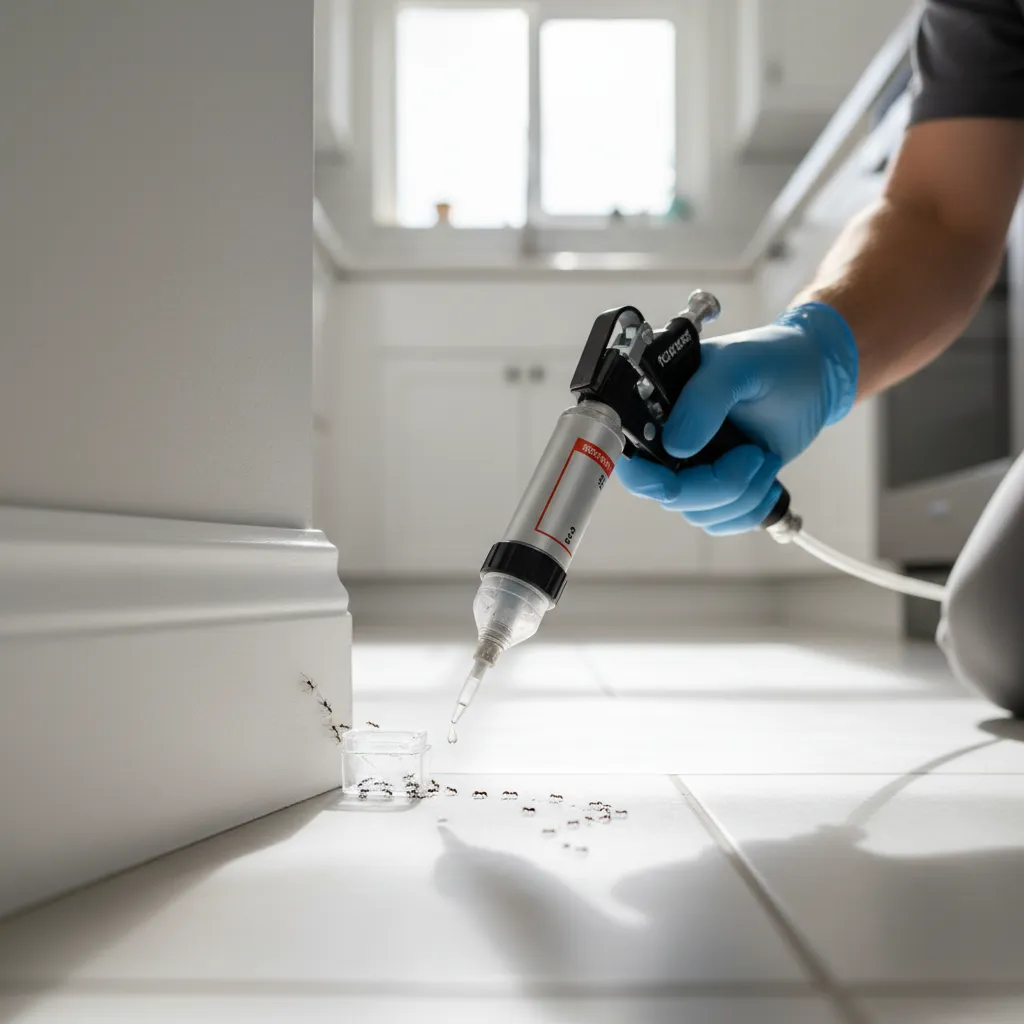
Spotted Signs of Pests?
Don’t wait for the problem to grow. Get a free inspection and customized treatment plan.
Signs You Need Ant Control
Ant control becomes necessary the moment you spot consistent activity inside or around your structure. Watch for these five indicators to find infestations early.
Visible Foraging Trails:
Lines of worker ants marching along baseboards, countertops, or window sills signal an established colony nearby. Sugar ants and odorous ants follow pheromone paths to food sources, and crushing them only redirects the trail. Professional bait stations break the cycle.
Sawdust Piles Near Wood:
Carpenter ants tunnel through damp framing, door jambs, and deck posts, ejecting fine sawdust called frass. Piles beneath baseboards or window frames are proof of active galleries. Left untreated, carpenter ants damage structural beams the same way termites do, just at a slower pace.
Mounds in the Yard:
Fire ant mounds appear as loose dirt domes across lawns, garden beds, and along driveways. Disturbing one releases hundreds of aggressive workers that sting in waves. Children, pets, and landscapers face real injury risk until a technician treats the colony.
Winged Ants Indoors:
Swarmers, the reproductive caste, emerge to breed and start new colonies. Finding winged ants near windows or light fixtures means a mature nest already exists inside the wall void, attic, or crawlspace.
Recurring Kitchen Invasions:
Ants returning to the same cabinet, sink, or pet bowl week after week point to a colony nesting inside the structure. Over the counter sprays kill foragers but never reach the queen. Our technicians locate the nest and eliminate the source.
Any one of these signs warrants a professional inspection before the infestation spreads further.
State Licensed
Certified Florida pest control operators
Background Checked
Uniformed, vetted technicians
Fully Insured
Complete liability coverage
EPA-Approved
Registered, safe-rated products only
Our Ant Control Process
Ant control at Abode Pest Solutions follows a documented five step process that produces consistent results.
Inspection
A licensed technician examines the interior, exterior, foundation, and landscaping. We identify the species, locate nests, map foraging trails, and note moisture issues that attract ants.
Identification
We confirm whether you’re dealing with carpenter ants, fire ants, pharaoh ants, argentine ants, pavement ants, or odorous house ants. Each species responds to different baits and application methods.
Treatment Plan
Your technician builds a custom plan listing products, application zones, and timing to accommodate your property’s needs. We review the plan with you, answer questions, and confirm pet and child safety protocols before starting.
Application
We apply gel baits along trails, drench mounds with approved insecticide, dust wall voids, and spray a residual perimeter barrier around the foundation. Granules go down on lawns where fire ants forage. Every product carries an EPA label and matches the target species.
Monitoring and Follow Up
We schedule a return visit within two to three weeks to verify colony collapse, install fresh bait stations, and inspect for new activity. Quarterly maintenance plans keep your property protected year round.
Throughout the process, our technicians wear respirators, gloves, and goggles, and we hand you a written report after each visit detailing what we treated and why.
Brands We Use
Our ant control program relies on professional grade products trusted by certified pest controllers nationwide. We select brands based on efficacy, EPA registration, and safety profiles for households with children and pets.






Every product we apply carries current EPA registration, and our technicians follow label directions to the letter.
Related Services
Ant infestations often signal broader pest pressure in the same property. Our licensed technicians also handle:
Termite Control
Cockroach Control
Rodent Control
Mosquito Control
Pest Exclusion and Proofing
Protect Your Home Today
Talk to a licensed pest control specialist now. Free inspections, same-day service, and a 100% satisfaction guarantee across all of Florida.